About
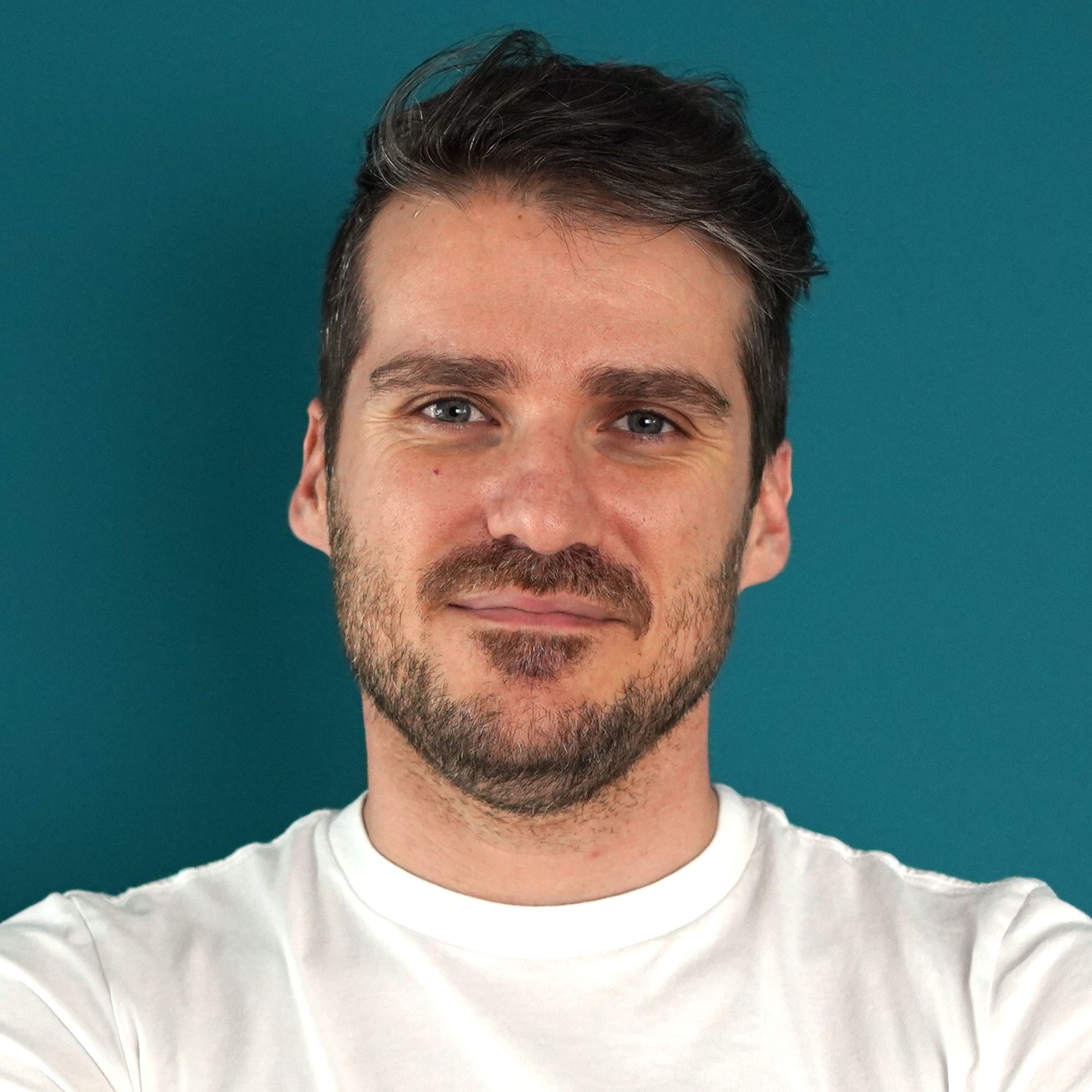
I am an AI engineer completing a specialised master's degree, and I spent eight years before that building other things: roof frames on historic buildings, timber structures, steel test rigs for an accredited laboratory, and CAD/CAM integrations for manufacturers across Europe and the Americas.
That sequence is not a detour. I trained as a carpenter with the Compagnons du Devoir, then as an engineer at ENSTIB, where I graduated first in a class of 96. From there I ran a design office at a sawmill, designed and conducted mechanical tests at a COFRAC-accredited laboratory, and spent nearly six years at a CAD/CAM software publisher across two spells, moving from technical support to training, testing, product advice and roadmap discussions.
The same reflex runs through all of it. I time the manual process before touching it, find where the hours actually go, automate that part with whatever tool I have, then document it and hand it over. In 2016 that meant an Excel and VBA quoting tool with a statistical regression predicting installation cost, which cut a quote from two hours to under one minute and let the company put two salespeople in the field with tablets. In a testing laboratory it meant a report pipeline that took production from two and a half hours to twenty minutes and cut the error rate from 20% to 5%. By 2023 the same reflex reached AI: a Whisper transcription pipeline with a domain dictionary and LLM-driven chaptering that turned recorded training sessions into e-learning modules five times faster, still in use at the company after I left.
Those AI projects came before the formal training, and none of them was assigned to me. I built them because I had measured the problem and could see what it cost. What the master's degree added is the part I could not teach myself piecemeal: supervised learning done properly, fine-tuning and preference alignment, RAG systems with real evaluation rather than a convincing demo, MLOps, and the habit of reporting what does not work alongside what does.
What I bring to an AI team is not only the modelling. It is eight years of asking what a system costs to run, who maintains it after I leave, and whether the gain was actually measured or merely assumed.
Career Goal
I am looking for an AI engineering role in French-speaking Switzerland, ideally one that keeps a consulting dimension: framing the need with the people who have it, auditing what already exists, comparing candidate approaches with their costs, and then building the thing rather than handing over a slide deck.
That combination is deliberate. The work I do best sits between a business problem and a technical answer, and I have spent most of my career on that boundary, first translating between field users and developers at a software publisher, then auditing and advising manufacturers as a certification auditor. Applied AI is where that translation is currently hardest and most valuable.
Concretely, I am interested in building and putting into production LLM-based systems, RAG and agent architectures, and the evaluation and monitoring that decide whether they can be trusted. I care about the parts that are usually skipped: measuring a baseline before automating anything, naming what a system cannot do, and making sure it still runs once I am no longer the one running it.
Practical details. Available from 15 October 2026. Target region: Canton de Vaud and the wider Suisse romande. As a French citizen I have the right to work in Switzerland under the EU/Switzerland Agreement on the Free Movement of Persons: the B EU/EFTA permit is issued on presentation of an employment contract, with no quota and no sponsorship required. Native French, professional English (five years of daily use in technical support, training and documentation), elementary Portuguese.